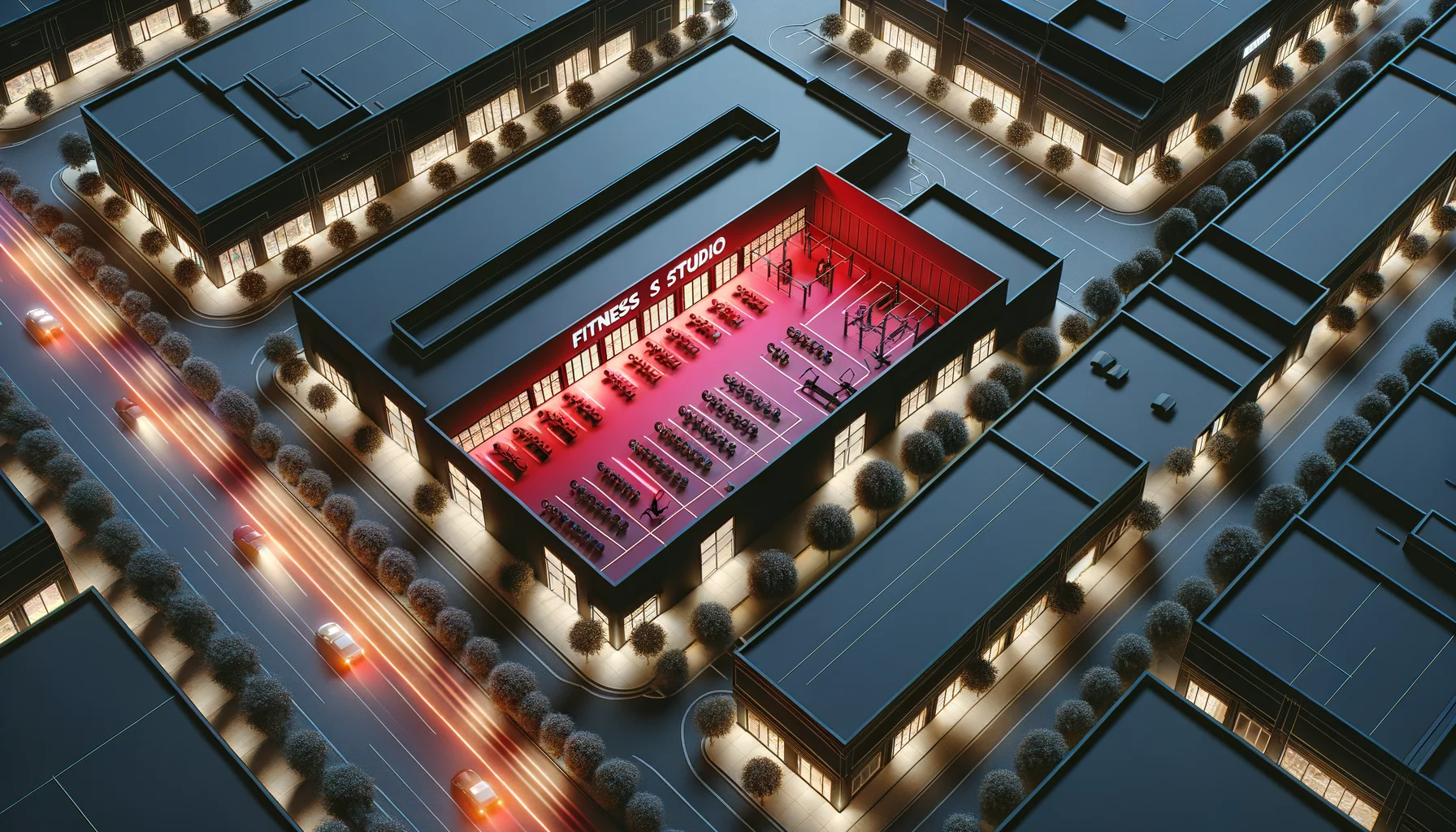
The Hotworx Site Selection Playbook: Real Estate, Build-Out, and the Three Lease Mistakes That Kill Studios
Your franchise fee buys the brand. Your lease determines whether you make money.
The infrared sauna is the product. The real estate is the business. Get the location wrong and no amount of marketing, presale hustle, or member engagement fixes it. Get it right and the unit economics fall into place almost mechanically.
Here's what the franchisor's site selection support doesn't cover: the three lease mistakes that have killed boutique fitness studios across every franchise system, and how to avoid them.
The Space: What Hotworx Actually Requires
A Hotworx studio operates in 1,500 to 2,500 square feet — one of the smallest footprints in boutique fitness. For context:
- Orangetheory Fitness: 2,800–4,000 sqft
- F45 Training: 1,600–2,200 sqft
- Planet Fitness: 15,000–20,000 sqft
The compact footprint is a genuine competitive advantage. It means lower rent, faster build-out, and more location options. A 2,000 sqft space in a strip center that couldn't support an Orangetheory works perfectly for Hotworx.
What Goes Inside
- Infrared sauna pods — the core equipment, typically 8–15 units depending on space
- Reception/check-in area — minimal staffing, 24-hour access via keycard or app
- Changing areas and restrooms — basic facilities, no showers in most locations
- Storage/mechanical — HVAC requirements are higher than standard retail due to sauna heat output
The equipment layout is standardized by corporate, which simplifies the build-out process but limits flexibility. You're not designing a custom studio — you're fitting a template into a space.
Where to Look: Location Types That Work
Hotworx studios favor strip centers and standalone retail pads with consistent foot traffic. The ideal co-tenants:
- Grocery stores — daily traffic, consistent visibility
- Pharmacies — health-adjacent, similar demographic
- Wellness and personal care — yoga studios, salons, chiropractic offices create a wellness cluster
- Coffee shops and quick-service restaurants — pre/post-workout traffic patterns
What Doesn't Work
- Second-floor locations — visibility kills. A sauna studio nobody can see from the road doesn't generate walk-in inquiries
- Industrial or office parks — wrong traffic patterns, wrong demographic density
- Enclosed malls — high rent, declining foot traffic, and lease complexity. Unless it's an outparcel with street visibility
- Locations with parking constraints — members need convenient parking for a 15–40 minute workout. If parking is a friction point, they'll skip sessions
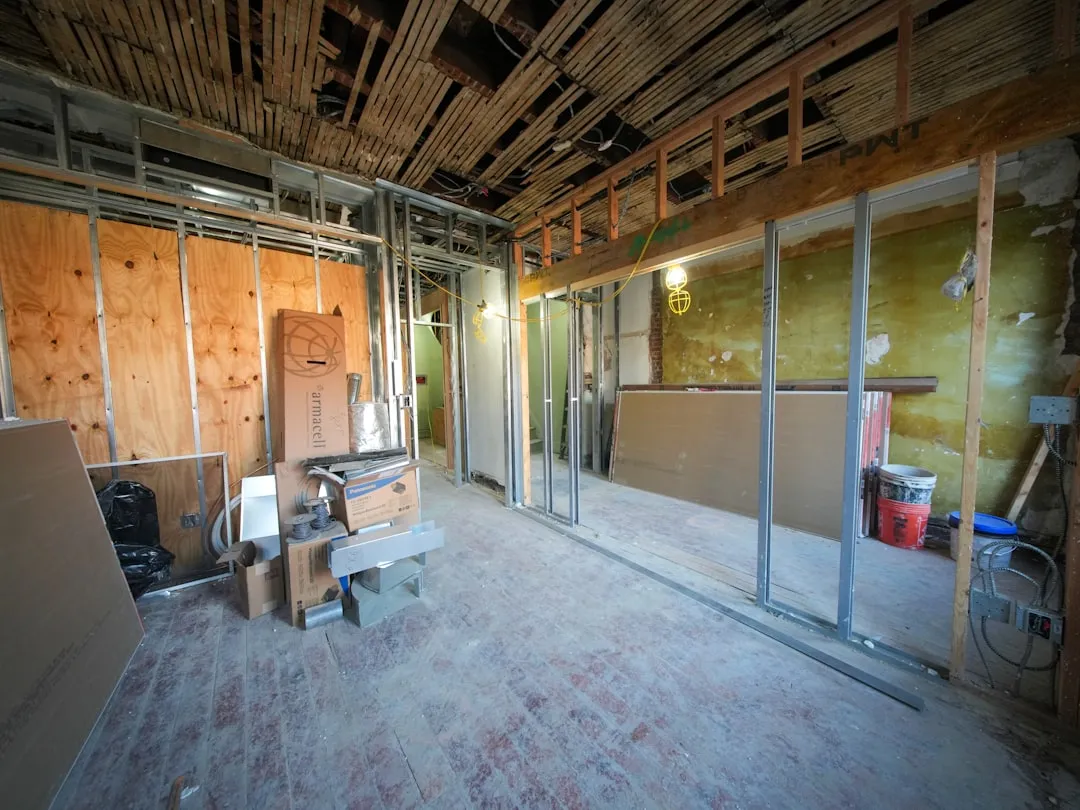
Build-Out: What It Costs and What Takes Longer Than You Think
The total build-out investment ranges from $100,000 to $250,000 depending on:
- Existing condition — a vanilla box (bare walls, concrete floor, basic HVAC) is cheaper to build out than a space with existing tenant improvements you need to demolish
- Market construction costs — labor and materials vary 30–50% between markets
- HVAC modifications — infrared saunas generate significant heat. Your HVAC system needs to handle the thermal load without making the reception area uncomfortable. This is the most commonly underestimated build-out line item
- Permitting timeline — varies dramatically by municipality. Some jurisdictions approve in 2–4 weeks. Others take 3–6 months. Research your local permitting timeline before committing to a lease start date
The Timeline
From lease signing to doors open: 4–9 months is the typical range. The variables:
| Phase | Duration |
|---|---|
| Design and permitting | 4–12 weeks |
| Construction and build-out | 6–12 weeks |
| Equipment installation | 2–3 weeks |
| Systems setup and testing | 1–2 weeks |
| Presale phase | 4–8 weeks (overlaps with build-out) |
The hidden cost: You're paying rent from the lease start date, but you're not generating revenue until you open. A 6-month build-out on a $5,000/month lease is $30,000 in rent before your first member walks in. Negotiate a rent abatement or reduced rent during build-out — this is standard in commercial leasing and most landlords expect the ask.
The Three Lease Mistakes That Kill Studios
Mistake 1: Signing a 10-Year Lease on Day One
Your franchise agreement is 10 years. The natural instinct is to match the lease term. Don't.
Why it's dangerous: If the location underperforms in years 1–3, you're locked into 7+ years of rent liability with no exit. If the franchise relationship ends for any reason — non-renewal, termination, personal circumstances — you're paying rent on a space you can't use.
The fix: Negotiate a 5-year initial term with two 5-year renewal options. You get the full 10-year runway if the location works, and an exit at year 5 if it doesn't. The renewal options should specify the rent escalation rate (cap it at 2–3% annually) so year-6 rent isn't a surprise.
Mistake 2: Ignoring the Assignment Clause
When you sell your franchise, the buyer needs to take over your lease. If your lease doesn't allow assignment — or requires landlord approval that can be withheld for any reason — your resale is blocked.
Why it's dangerous: You find a qualified buyer. Hotworx approves them. The buyer is ready to close. Your landlord says no. The deal dies, and you're stuck.
The fix: Before signing the lease, ensure it includes an assignment clause that allows transfer to any buyer approved by the franchisor, with landlord approval not to be unreasonably withheld. Get this in writing. It's a standard provision in commercial leases — if a landlord won't include it, find a different space.
For more on the resale process and what exit actually costs, see our exit strategy analysis.
Mistake 3: Overbuilding for Visibility
Premium corner locations with maximum street frontage are expensive. And for a Hotworx studio — where 80%+ of members come from targeted digital marketing, not walk-in traffic — the premium rarely pays for itself.
Why it's dangerous: A $7,000/month corner pad vs. a $4,000/month inline strip center unit means $36,000/year in additional rent. On a franchise that averages $330K in annual revenue, that's 10.9% of gross revenue — the difference between profitable and breakeven.
The fix: Optimize for adequate visibility and convenient access, not maximum visibility. Members find you through Google, Instagram, and referrals — not by driving past. The money you save on rent is better spent on local marketing and presale acquisition.
The Rent Reality: What You Should Be Paying
Based on publicly available data and market benchmarks:
| Market Type | Monthly Rent Range | Annual Rent |
|---|---|---|
| Small/mid-market | $2,500–$4,000 | $30,000–$48,000 |
| Suburban major metro | $4,000–$5,500 | $48,000–$66,000 |
| Urban/premium | $5,500–$7,000+ | $66,000–$84,000+ |
As a percentage of the $330K average revenue: rent should ideally fall between 9% and 16% of gross revenue. Above 20% and your unit economics are under serious pressure.
NNN vs. Gross Lease
Most strip center leases are triple net (NNN) — you pay base rent plus your proportional share of property taxes, insurance, and common area maintenance (CAM). The NNN add-on typically runs $3–$8 per square foot per year, adding $6,000–$20,000 annually on top of base rent.
Always ask for the total occupancy cost, not just the base rent. A $4,000/month base rent with $1,200/month in NNN charges is really $5,200/month.
The Site Selection Process: What Corporate Provides and What You Own
Hotworx's franchisor team supports site selection with market analysis, demographic data, and build-out guidance. This is genuine value — they've opened 700+ locations and have pattern recognition you don't have.
But the lease is yours. The landlord relationship is yours. The local market risk is yours.
What to do:
- Use the franchisor's tools and data, but verify independently
- Hire a local commercial real estate broker who specializes in retail — their commission is paid by the landlord
- Visit the site at different times of day and different days of the week
- Talk to neighboring tenants about foot traffic, parking, and landlord responsiveness
- Run a territory saturation analysis before committing to a market, not just a location
Make Real Estate the Decision, Not an Afterthought
The franchise system gives you the brand, the equipment, the technology, and the operating playbook. Real estate is the one variable that's entirely in your hands — and it's the single biggest determinant of whether your unit economics work.
Spend as much time on the lease as you do on the FDD. They're equally binding, equally long-term, and equally determinative of your financial outcome. For the full operational picture, see our Operations hub.
Hotworx Franchise Intel is editorially independent. See our About page for methodology and data sources.