The Year-5 Question Nobody Asks: Equipment Lifecycle and Replacement Capex at a Hotworx Studio
Your infrared saunas have a shelf life. Your financial model should account for it.
Introduction
You’ve seen the Item 7 buildout costs. You’ve modeled the SBA payments. You’ve stress-tested the revenue scenarios using Item 19 data. But somewhere around year 4, a question will surface that wasn’t in any franchise brochure: how much does it cost to replace everything that’s wearing out?
Every Hotworx studio is built around specialized equipment operating under extreme conditions — infrared heating elements running at 120–150°F for hours daily, virtual instruction screens cycling continuously, and HVAC systems handling heat loads that would destroy a standard commercial unit. This equipment doesn’t last forever. And the replacement cost isn’t a rounding error.
Nobody models this. Not the franchise sales team, not the aggregator sites, not the FDD explainer blogs. This piece does.
What You’re Actually Operating
A typical Hotworx studio runs 4–6 infrared saunas, each representing a $15,000–$50,000 investment depending on configuration, size, and features. Total sauna equipment alone: $60,000–$300,000 at buildout.
But saunas aren’t the only capital equipment:
- Virtual instruction screens and media players — one per sauna, running 16+ hours per day
- HVAC systems — commercial-grade units handling extreme and continuous heat loads that far exceed normal commercial gym conditions
- Specialized flooring — heat-resistant materials in sauna areas that degrade faster than standard gym flooring
- Access control and security systems — critical for the 24/7 unmanned model
- Lighting and electrical systems — operating in high-heat environments that accelerate component degradation
The initial buildout is the number everyone models. The ongoing capital expenditure is the number almost nobody does.
The Equipment Depreciation Curve
Infrared Heating Elements: The Core Asset
Infrared heating elements are the heart of the Hotworx model. Commercial-grade far-infrared heaters typically carry manufacturer warranties of 3–5 years, with expected useful life of 5–8 years under normal commercial use.
“Normal commercial use” is the key phrase. A Hotworx studio isn’t a day spa running two sessions per day. These units operate on a heavy-rotation schedule, often running 12–16 hours daily across multiple member sessions. Higher utilization compresses the useful life toward the lower end of that range.
Replacement cost per sauna heating element assembly: $3,000–$8,000, depending on the unit and whether you’re replacing elements only or the full panel assembly.
Replacement cost for a full 5-sauna studio: $15,000–$40,000 for heating elements alone.
Virtual Instruction Screens
Commercial-grade displays running in high-heat environments face accelerated degradation. Standard commercial display warranties are 3 years. In the elevated temperatures inside an infrared sauna, expect:
- Screen brightness degradation within 2–3 years
- Component failure rates increasing significantly after year 3
- Full replacement typically needed by year 5–6
Replacement cost per unit: $1,500–$3,500 for commercial-grade displays with media players.
Replacement cost for 5 units: $7,500–$17,500.
HVAC Systems
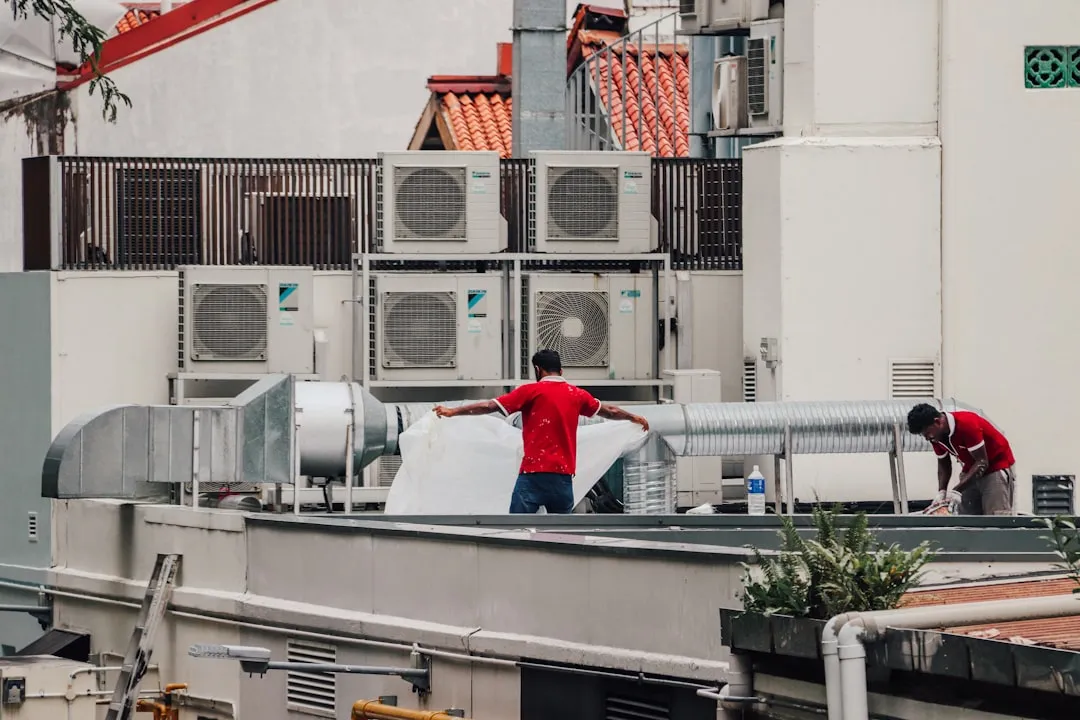
This is the hidden capital expense that catches owners off guard. A standard commercial HVAC system serving a 2,000–3,000 sq ft retail space is sized for normal heat loads. A Hotworx studio generates sustained internal heat loads from multiple infrared saunas running simultaneously — a fundamentally different engineering challenge.
The result: HVAC systems in Hotworx studios run at significantly higher duty cycles than comparable commercial spaces. Industry HVAC contractors report that systems in extreme-environment applications like infrared fitness studios typically need major service or compressor replacement within 5–7 years, compared to 10–15 years for standard commercial installations.
Major HVAC overhaul or replacement: $15,000–$40,000 for a commercial unit appropriately sized for an infrared studio.
The Cumulative Year-5 Scenario
Here’s what a realistic capital refresh budget looks like around the 5-year mark:
| Component | Estimated Replacement Cost | Likelihood by Year 5 |
|---|---|---|
| Infrared heating elements (partial) | $15,000–$25,000 | High |
| Virtual instruction screens (2–3 units) | $4,500–$10,500 | Moderate-High |
| HVAC compressor/major service | $8,000–$20,000 | Moderate |
| Flooring repair/replacement | $3,000–$8,000 | Moderate |
| Access control/security refresh | $2,000–$5,000 | Low-Moderate |
| Total estimated capex | $32,500–$68,500 | — |
That’s $32,500–$68,500 in capital expenditure that doesn’t appear in your initial pro forma. If you’re financing the original buildout with an SBA 7(a) loan, you’re still making those monthly payments when the refresh bill arrives.
How This Affects Your Return Model
Most Hotworx financial models project returns over a 5–10 year horizon. The unit economics analysis on this site models the owner take-home on $330K revenue — but that model assumes steady-state operating costs.
When you layer in replacement capex, the math changes:
Scenario: $330K annual revenue, $49,500 estimated owner earnings
- Year 1–4: Earnings track the model (equipment under warranty, minimal capex)
- Year 5: $40,000 in replacement capex → owner earnings drop to approximately $9,500 that year
- Year 6–8: Earnings recover, but another partial refresh may be needed by year 8
The cumulative impact over a 10-year franchise term: $60,000–$120,000 in total replacement capex that most projections ignore.
This doesn’t make Hotworx a bad investment. It means the true return is lower than the initial model suggests — and investors who plan for it will navigate it. Investors who don’t will face an unpleasant surprise.
What the FDD Says (and Doesn’t Say)
The Franchise Disclosure Document’s Item 7 covers initial investment. It does not typically include a detailed equipment replacement schedule or projected ongoing capital expenditure requirements.
Item 6 covers ongoing fees, and Item 8 covers sourcing restrictions — both relevant if the franchisor requires you to purchase replacement equipment through approved vendors at potentially non-competitive prices.
Questions to ask during due diligence:
- What is the expected useful life of each major equipment category?
- Are there required equipment refresh or upgrade cycles in the franchise agreement?
- Must replacement equipment be sourced through the franchisor or approved vendors? At what markup?
- What technology upgrades has the franchisor required of existing franchisees, and at what cost?
- Do any existing franchisees have studios older than 5 years? What has their actual capex experience been?
These are the questions a good franchise attorney would raise. Ask them before you sign, not after.
Capital Planning: Building a Replacement Reserve
Smart Hotworx operators build a capital reserve from day one. The approach:
Monthly reserve contribution: Set aside 3–5% of gross revenue into a dedicated equipment replacement fund.
On $330K annual revenue, that’s $825–$1,375 per month, or roughly $10,000–$16,500 per year. After 4 years, you’d have $40,000–$66,000 reserved — enough to cover most year-5 refresh scenarios without emergency financing.
Why this matters for financing: If you’re evaluating the total capital commitment for a Hotworx franchise, the initial buildout is only part of the picture. Your capital plan should include reserve funding through the first major refresh cycle. Lenders evaluating your franchise application — including SBA lenders and capital advisors like Lendesca — will view a business plan more favorably when it demonstrates awareness of lifecycle costs, not just startup costs.
What Existing Owners Report
Because Hotworx launched in 2017 and began franchising aggressively in 2019–2020, the franchise system is only now reaching the point where the earliest studios face meaningful equipment aging. Limited public data exists on actual replacement experiences.
During validation calls and Discovery Day, ask franchisees specifically:
- What equipment has failed or needed replacement?
- What was the actual cost?
- Did the franchisor assist with replacement sourcing or pricing?
- Were any technology upgrades mandated? At whose cost?
- How has your HVAC system performed under the sustained heat load?
Studios in hot climates (Texas, Arizona, Florida) may face accelerated HVAC degradation. Studios in high-utilization markets will compress sauna element life. The answers will vary — but asking the questions is non-negotiable.
The Bottom Line
The Hotworx franchise investment isn’t $258K–$359K. It’s that initial buildout plus $60,000–$120,000 in replacement capex over a 10-year franchise term. Whether that changes your investment thesis depends on your revenue assumptions, your reserve discipline, and your expectations.
The investors who get burned aren’t the ones who face equipment costs — every business has them. They’re the ones who didn’t plan for them. Model the full lifecycle, fund the reserve, and ask the questions that the franchise sales process won’t volunteer.
For a complete picture of the hidden operating costs beyond equipment replacement, including technology fees, marketing fund obligations, and insurance premiums, read our deep dive on the monthly expenses nobody warns you about.
FAQ
How much does it cost to replace infrared sauna heating elements?
Individual heating element assemblies cost $3,000–$8,000 per sauna unit. For a typical 5-sauna Hotworx studio, full element replacement runs $15,000–$40,000. Elements typically need replacement within 5–8 years of commercial use.
Does Hotworx require franchisees to buy replacement equipment from approved vendors?
Franchise agreements typically include sourcing restrictions outlined in FDD Item 8. Check whether replacement equipment must come from approved vendors and at what pricing. This can significantly affect replacement costs if competitive bidding isn’t available.
What is a reasonable capital reserve for equipment replacement?
Setting aside 3–5% of gross revenue monthly creates a $40,000–$66,000 reserve over four years on average Hotworx revenue — enough to cover most year-5 refresh scenarios. Building this reserve from month one is the most disciplined approach.
Our methodology and data sources are documented on our About page. Equipment cost estimates are based on industry data for commercial infrared fitness equipment and HVAC systems as of early 2026.