Hotworx’s Proprietary Tech Stack: The Dependency Risk That Gets More Expensive Every Year
SAIL POS, TrainingTRAX, proprietary booking — your entire business runs on software you don’t control.
Introduction
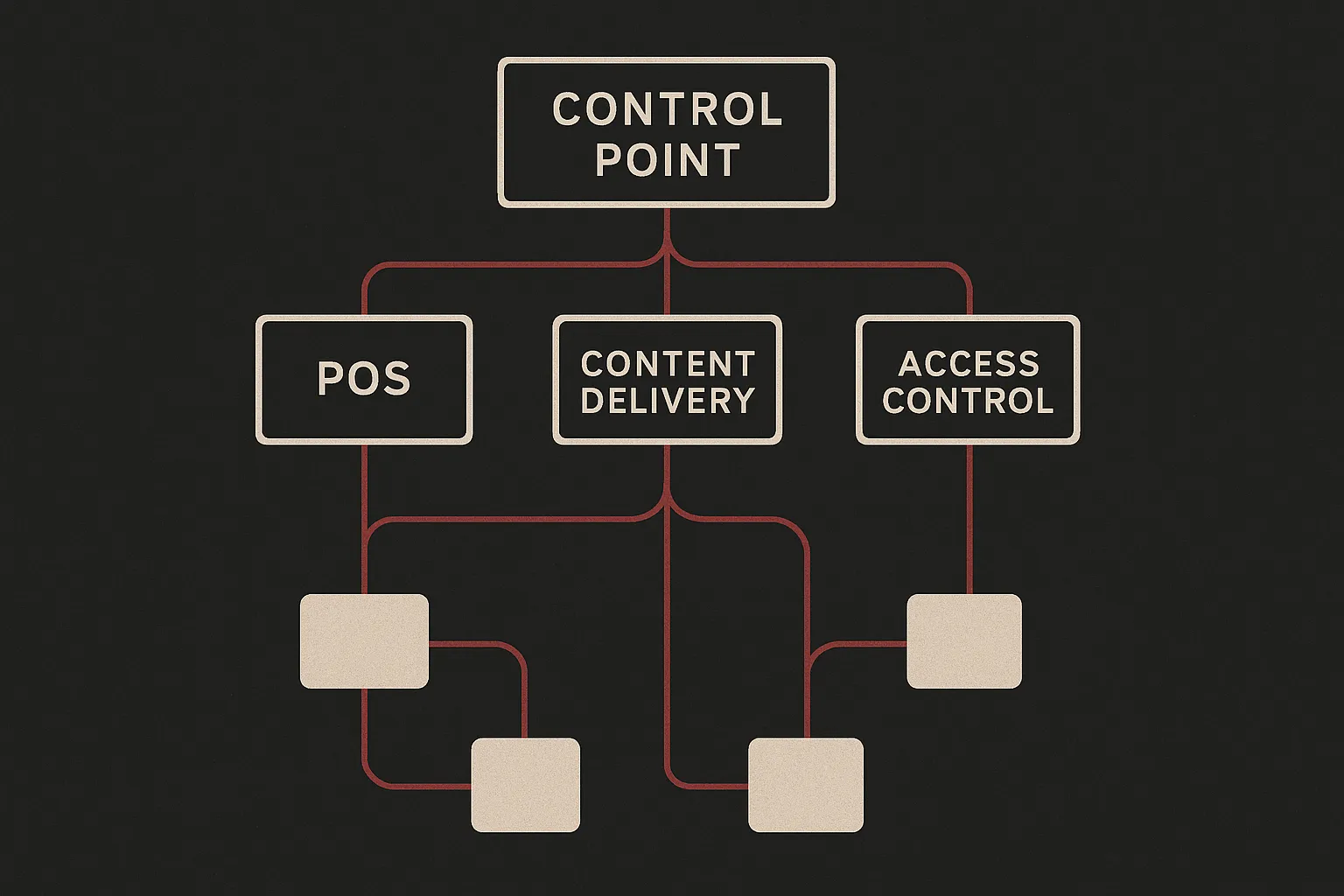
You’re evaluating a Hotworx franchise as an investment. You’ve modeled the unit economics, stress-tested the lease, and maybe even visited a few studios. But there’s a structural risk factor that almost never appears in franchise broker presentations or FDD summaries: every system your business depends on — point-of-sale, member booking, workout content delivery, 24/7 access control — is proprietary, franchisor-controlled, and non-substitutable.
This isn’t a footnote. It’s the architecture of your entire business. And it creates a dependency relationship that tilts leverage toward the franchisor in ways that compound over time, especially at franchise agreement renewal.
The Tech Stack You’re Buying Into
When you sign a Hotworx franchise agreement, you’re committing to an integrated technology ecosystem with no third-party alternatives. Here’s what you’re running on:
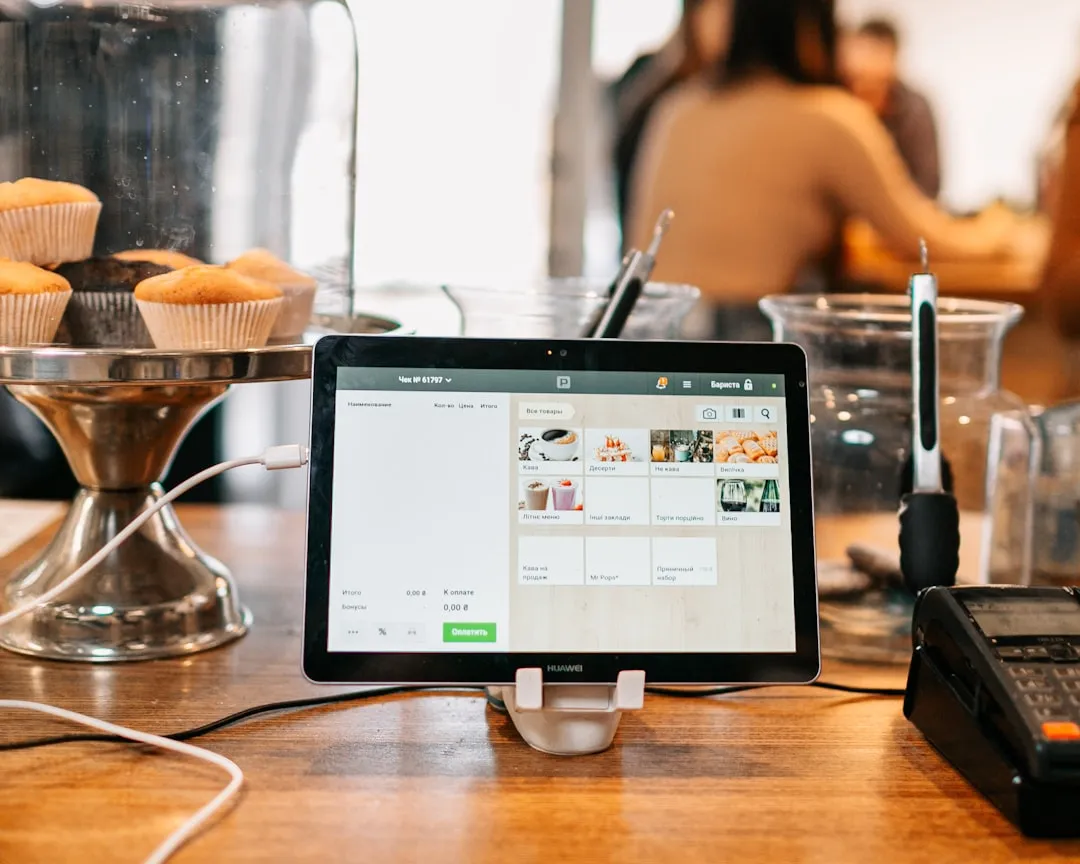
- SAIL POS. Every transaction — membership sales, retail, payment processing — flows through Hotworx’s proprietary point-of-sale system. This isn’t a Square terminal you can swap out. It’s a closed system tied to the franchise’s payment infrastructure.
- TrainingTRAX. The virtual instruction platform that delivers Hotworx’s workout content to the screens inside each sauna. This isn’t supplemental — it IS the product. Without TrainingTRAX, you have an infrared room with no classes. See our TrainingTRAX analysis for the full breakdown.
- Proprietary booking and membership management. Scheduling, member sign-ups, billing, cancellation processing — all handled through franchisor-controlled software. You don’t pick your membership management vendor.
- 24/7 access control. Keycard or biometric entry systems that enable the unmanned studio model. This is what makes the semi-absentee ownership pitch possible — and it’s entirely dependent on franchisor technology working around the clock.
The critical distinction: unlike a restaurant franchise where you might run Toast or Square and could theoretically switch POS providers, Hotworx’s technology IS the business model. The infrared sauna workout with virtual instruction requires proprietary content delivery. The 24/7 unmanned model requires proprietary access control. The membership structure requires proprietary billing.
If any single component in this stack goes down, your studio’s ability to generate revenue is compromised. If the access system fails during unmanned hours, members literally cannot enter the building.
What “Proprietary” Actually Means for Your Business
The word “proprietary” shows up in franchise marketing materials as a positive — it implies innovation, differentiation, competitive advantage. And it can be those things. But from an investment risk standpoint, proprietary also means:
Zero Vendor Alternatives
You cannot shop for a better POS. You cannot switch to a different instruction platform. You cannot integrate an alternative booking system. The franchisor is your sole technology vendor for every critical business system. In any other business context, sole-source dependency on a single vendor for all mission-critical systems would be flagged as a material risk in due diligence.
Unilateral Pricing Power
The franchisor sets technology fees and can adjust them over the term. Review your franchise agreement carefully for technology fee escalation language. Is there a cap on annual increases? Is there a fixed schedule, or can fees change at the franchisor’s discretion? If the agreement says something like “technology fees as determined by franchisor from time to time,” that’s an open-ended cost obligation.
Per the FTC Franchise Rule, Item 6 of the FDD must disclose ongoing fees including technology fees. But it discloses the current fee structure — not future increases. The fee you see in the 2026 FDD is not necessarily the fee you’ll pay in 2031.
No Influence Over the Product Roadmap
You have no say in what features get built, what bugs get prioritized, or what systems get deprecated. If the franchisor decides to sunset a feature your members rely on, or roll out a UI change that confuses your front desk staff, your input is a suggestion at best.
Data Ownership Questions
Your member data, transaction history, and business analytics live in systems you don’t own. This raises specific questions:
- Can you export your member list in a standard format (CSV, API access)?
- What happens to your data if you don’t renew your franchise agreement?
- If you sell the franchise, does the buyer get historical data, or does it stay with the franchisor’s system?
- Are you permitted to use your own member data for local marketing campaigns, or are there restrictions?
These aren’t hypothetical concerns. At franchise agreement expiration, data portability becomes a concrete negotiating issue.
Integration Limitations
Want to add a third-party CRM like HubSpot? A local marketing automation tool? An advanced analytics platform? It only works if the proprietary stack exposes an API — and most franchise tech stacks don’t. You’re limited to whatever tools the franchisor decides to integrate, on the timeline the franchisor sets.
When Things Go Wrong: The Downtime Risk
Consider the difference between technology failure at a traditional gym versus a Hotworx studio.
Traditional gym with a POS outage: Members swipe their keycards and enter. Classes run with live instructors. The front desk processes payments manually or waits for the system to come back. Revenue loss is minimal because the physical service continues.
Hotworx studio with a system outage: The scenario cascades. If the access control system goes down during unmanned hours, members can’t get in. If SAIL POS goes down, no payments process. If TrainingTRAX goes down, the saunas are hot rooms with blank screens — there’s no workout to do. The unmanned model that makes Hotworx operationally lean is the same model that makes it acutely vulnerable to technology failure.
The Revenue Math on Downtime
Let’s put numbers to it. Based on our unit economics analysis, a performing Hotworx studio generates roughly $30K–$40K per month in revenue. Call it $35K for the midpoint.
- Daily revenue: ~$1,167
- Hourly revenue equivalent: ~$49
- 8-hour system outage: ~$389 in direct revenue at risk
- 24-hour outage during unmanned period: potentially $700+ in lost sessions
But the direct revenue loss understates the real impact. An 8-hour access outage during evening/overnight hours means members show up, can’t get in, and leave frustrated. Some percentage of those members:
- Post about it on Google Reviews
- Call to cancel their membership
- Simply stop coming and let the membership lapse
The churn effect of a reliability failure in a 24/7 unmanned environment is worse than in a staffed gym. There’s nobody at the front desk to apologize, explain the situation, or offer a make-good. The member’s experience is: drove to the gym, door didn’t work, drove home.
Service Level Agreements
Read your franchise agreement for any technology uptime guarantees. Specifically:
- Does the franchisor commit to a specific uptime percentage (99.9% is industry standard for SaaS)?
- What compensation or fee credits do you receive if the system falls below the guaranteed uptime?
- Is there a dedicated support line for franchisees experiencing technology outages, or are you submitting tickets into a general queue?
If there’s no SLA, you’re accepting unlimited downtime risk with no contractual remedy. That’s a material gap in the franchise agreement that should be part of your negotiation.
TrainingTRAX — When the Product IS the Platform
This section deserves specific focus because TrainingTRAX isn’t just another piece of the tech stack. It IS the Hotworx product experience.
Hotworx’s value proposition is virtual instruction in an infrared sauna environment. Members aren’t coming for open gym time or to use equipment at their own pace. They’re coming for structured, guided workouts delivered on a screen inside a heated sauna. TrainingTRAX delivers that content.
Content Freshness and Member Retention
Workout content has a shelf life. Members who cycle through the same 15–20 workouts over 6 months notice the repetition. In a live-instructor model like comparable franchise concepts, coaches vary routines daily and adapt to the room. In a virtual instruction model, variety depends entirely on how frequently the franchisor produces new content.
Questions for validation calls:
- How many unique workout sessions are currently in the TrainingTRAX library?
- What is the production cadence for new content (monthly, quarterly, annually)?
- Has the content library grown meaningfully in the last 12 months?
If content updates slow down — due to franchisor budget constraints, strategic pivots, or simple neglect — your member experience degrades. And unlike a gym with live instructors, you can’t supplement with your own content. You’re contractually limited to the franchisor’s platform.
The AI Coaching Layer
Hotworx recently added AI-powered coaching features to TrainingTRAX, including personalized workout plans and an AI coach chat function. See our full TrainingTRAX analysis for the investor-relevant breakdown.
From a dependency perspective, the AI layer adds another franchisor-controlled feature that members may come to rely on. If the AI coaching proves effective at improving retention (as Hotworx claims), that’s good for unit economics — but it also deepens the technology dependency. Members aren’t just locked into the sauna and the content; they’re locked into a personalized AI relationship that exists only within the Hotworx ecosystem.
The Orangetheory Comparison
Orangetheory franchisees have live coaches who can adapt programming in real time, build personal relationships with members, and maintain service quality independent of any technology platform. If Orangetheory’s heart rate monitoring system goes down, the coach still runs a great class.
Hotworx franchisees have a screen playing franchisor-produced content. If TrainingTRAX goes down, the class doesn’t happen. This isn’t a criticism of the Hotworx model — it’s a factual description of where operational risk lives. The risk is concentrated in technology you don’t control rather than staff you do. For context on the broader fitness-tech competitive landscape and where Hotworx’s tech stack ranks against every major franchise, see our arms race analysis.
The Year-10 Leverage Problem
Technology dependency becomes acutely relevant at franchise agreement renewal, typically at year 10. Here’s why.
At renewal, both parties theoretically have leverage. You’ve built a member base, established local reputation, and invested real capital. The franchisor wants you to continue paying royalties and technology fees.
But technology dependency makes this negotiation asymmetric. The franchisor holds the keys to every system your business runs on. Walking away from the franchise agreement means:
- Losing access to SAIL POS (your payment processing stops)
- Losing access to TrainingTRAX (your workout content disappears)
- Losing access to the booking system (your members can’t schedule)
- Losing access to the access control system (your 24/7 model stops working)
De-identification costs for a Hotworx location typically run $50K–$100K+, and a significant portion of that is technology removal and replacement. You’d need to source and implement an entirely new POS, booking platform, access control system, and — critically — workout content delivery method. At that point, you don’t have a Hotworx studio anymore. You have an infrared room with no brand, no content, and no integrated systems.
The franchisor knows this. Which means at renewal, if they want to increase technology fees, modify the fee structure, or impose new technology requirements, your walk-away alternative is so expensive that accepting unfavorable terms may still be the rational financial decision.
The question every prospective investor should model: what is the total cost of NOT renewing at year 10, given technology dependency? If the answer is “effectively, I’d have to shut down,” then the franchisor’s renewal leverage is near-total.
If technology fees have increased during the initial 10-year term, there’s no structural reason they wouldn’t increase again at renewal. And your negotiating position is weaker, not stronger, because you’ve now invested 10 years of capital and sweat equity into a business that runs entirely on their rails.
The Technology Fee Economics
Technology doesn’t just create dependency — it’s also a recurring cost center. Here’s what to look for in the Hotworx FDD:
Initial Technology Costs
The FDD Item 7 (estimated initial investment) will include technology setup fees, required hardware purchases, and initial software licensing. Review these line items carefully and compare them to what franchise cost analyses report.
Ongoing Monthly Technology Fees
Look for technology-related line items in Item 6 (other fees). These may be labeled as “technology fees,” “software licensing fees,” “POS fees,” or similar. Add them up — the total monthly technology cost is often higher than franchisees expect because it’s split across multiple line items.
The Upgrade Cycle
When Hotworx rolls out new hardware or software requirements, who pays? The answer is almost always the franchisee. This creates an unpredictable capex cycle:
- New sauna screens required → franchisee pays
- Access control hardware upgrade → franchisee pays
- POS terminal replacement → franchisee pays
- Software feature requiring new hardware → franchisee pays
Our equipment lifecycle and replacement capex analysis covers the hardware side of this equation in detail. The technology layer adds software-driven upgrade requirements on top of the natural hardware replacement cycle.
Technology Obsolescence Risk
The infrared saunas, the virtual instruction screens, the access control hardware — all have finite lifespans. Industry standard for commercial fitness technology is 5–7 years before major refresh. The franchisor controls replacement specifications, which means they control when you need to spend and how much.
If the franchisor decides the brand needs a technology refresh at year 6 — new screens, new access control, new POS terminals — and requires compliance within 12 months, that’s an unplanned capex event that could run $20K–$50K depending on scope. Review your franchise agreement for required technology upgrade clauses and compliance timelines.
Compare this structure against other franchise models using independent analysis from Vetted Biz to understand whether Hotworx’s technology cost structure is in line with or above comparable boutique fitness concepts.
Due Diligence Questions About Technology
Bring these to your validation calls with existing franchisees and your franchise attorney review. These are the questions that separate thorough investors from those who sign with blind spots.
- What is the guaranteed system uptime? Is there a formal SLA in the franchise agreement, and what remedies (fee credits, compensation) exist if the system falls below it?
- What happens to my business data if I don’t renew? Can I export my full member database, transaction history, and business analytics? In what format? On what timeline?
- Can I export member data in standard formats? If you can’t get a CSV of your own member list at any time, that’s a red flag for data portability.
- What technology fee increases have occurred in the last 3 years? Ask existing franchisees, not the franchisor. Compare their answers to what the FDD discloses.
- How often is TrainingTRAX content updated? Get specific numbers — how many new workouts were added in the last 12 months? Ask franchisees whether their members have commented on content freshness.
- What’s the process when the POS or access system goes down during unmanned hours? Is there 24/7 tech support? What’s the average resolution time? Have franchisees experienced extended outages?
- Are there any third-party integrations available? Can you connect a CRM, a local marketing platform, or an analytics tool to the proprietary stack? If so, which ones are approved?
- What technology-related capex am I required to make during the 10-year term? Has the franchisor imposed any mid-term hardware or software upgrades on existing franchisees? What did those cost?
- Who controls the payment processing relationship? What are the processing rates through SAIL POS, and can you negotiate them? How do they compare to market rates from processors like Square or Stripe?
- What is the franchisor’s technology development team and budget? Is there a dedicated technology team maintaining and improving the stack, or is it outsourced? How confident are existing franchisees in the pace of technology improvement?
The Bottom Line
Technology lock-in is not unique to Hotworx. Most franchise systems involve some degree of proprietary technology dependency. But Hotworx’s model concentrates that dependency more heavily than most because the technology doesn’t just support the business — it IS the business. The workout is virtual. The studio is unmanned. The entire member experience is mediated by franchisor-controlled software and hardware.
This doesn’t mean Hotworx is a bad investment. It means the technology dependency should be modeled as a specific risk factor with quantifiable cost implications. Build it into your financial projections: What if technology fees increase 10% annually? What’s your walk-away cost at year 10? What’s the revenue impact of a 24-hour system outage?
The franchisees who get surprised by this are the ones who evaluated the brand, the market, and the unit economics — but never stress-tested the technology dependency. The ones who build it into their model from Day 1 make better decisions at signing, at renewal, and at exit. Visit our Operations hub for more analysis on the operational realities of running a Hotworx franchise.
This analysis is based on publicly available franchise disclosure documents, owner-reported financial data, and industry benchmarks. Hotworx Franchise Intel is an independent research publication with no financial relationship with Hotworx or its franchisor. See our editorial independence statement for methodology and sourcing standards.