The Line Items Nobody Mentions: Every Hidden Monthly Cost of Running a Hotworx Studio
The FDD shows 25 fees. Your monthly P&L has more. Here’s every cost that shows up after you open.
You’ve read the FDD. You’ve modeled rent, staffing, and the $550 royalty. You’ve accounted for the initial investment range. And you’re still going to be surprised by your first full month’s P&L.
Between the franchise fees everyone discusses and the fixed costs everyone expects, there’s $1,500–$3,000/month in technology, compliance, processing, and utility costs that most prospective franchisees don’t model until they’re already operating. These aren’t hidden in the sense that they’re undisclosed — most appear somewhere in the FDD’s 25 enumerated fees. They’re hidden because nobody stacks them together and shows you the total.
This article does exactly that. Every recurring cost, every penalty exposure, every line item that belongs in your unit economics model before you sign.
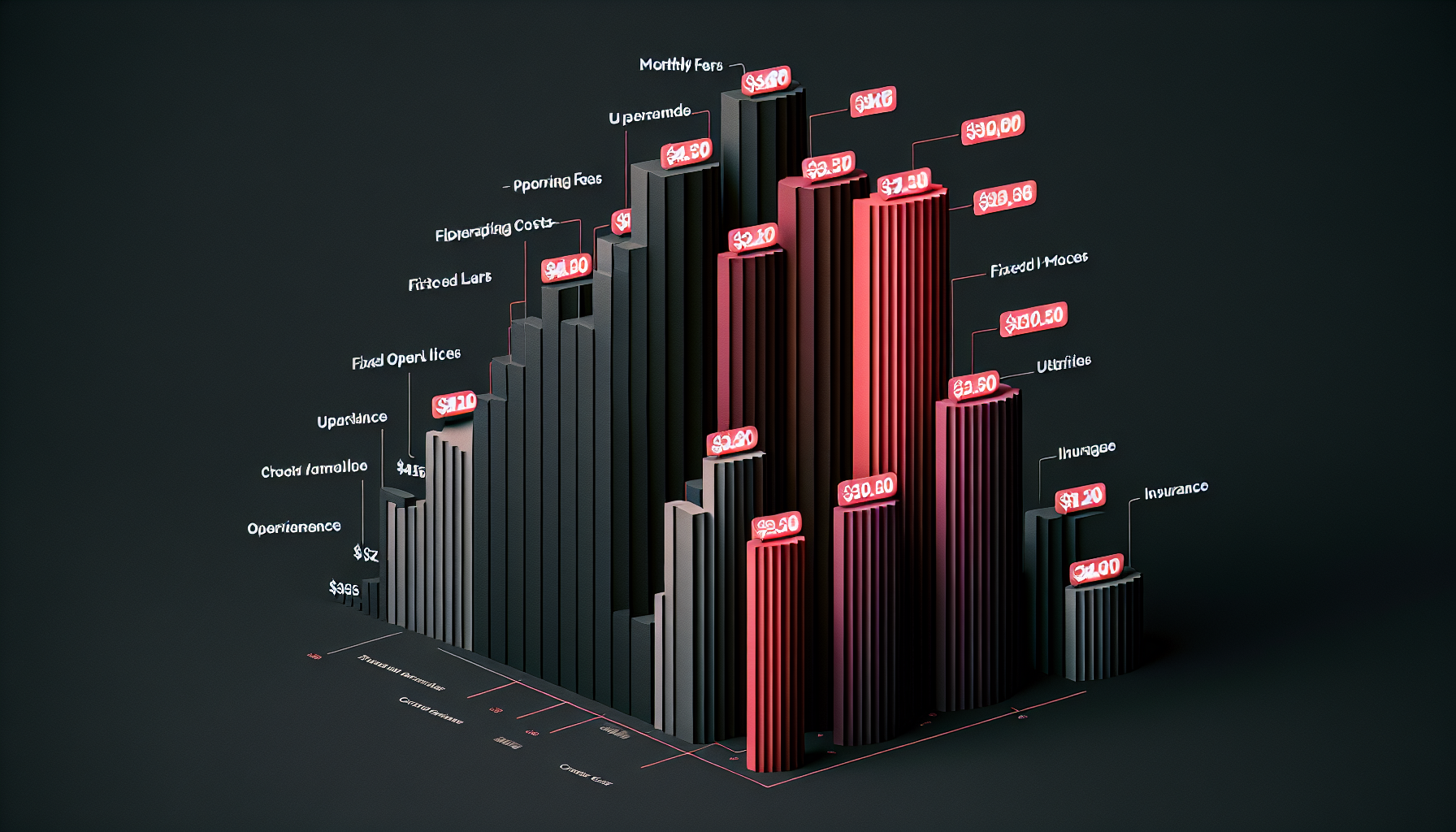
The Fee Stack Nobody Adds Up
Hotworx’s fee structure is unusually fragmented. Instead of one royalty percentage that covers everything, you’re paying separate monthly charges for each technology layer. FranchiseChatter’s analysis identified 25 distinct fees in the FDD. Here are the ones that hit your account every single month:
- Royalty fee: $550/month (flat, not percentage-based)
- POS software: $129/month
- CRM platform (SAIL): $125/month per studio
- Virtual instructor software: $10/sauna/month × 10 saunas = $100/month
- Technology fee: Up to $100/month
- Credit card processing: 3% of all charges
Add those up before you’ve paid rent, hired anyone, turned on the lights, or spent a dollar on marketing:
| Line Item | Monthly Cost |
|---|---|
| Royalty | $550 |
| POS software | $129 |
| CRM (SAIL) | $125 |
| Virtual instructor software | $100 |
| Technology fee | $100 |
| Subtotal (fixed) | $1,004 |
| Credit card processing (3%) | Variable |
On $25,000/month in gross revenue, that 3% processing fee adds $750. On $30,000, it’s $900. This is revenue that passes through your terminal and never reaches your bank account.
The flat $550 royalty is actually favorable at higher revenue levels — it functions like a 1.7% royalty on $330K annual gross sales versus the 6–8% percentage royalties common in fitness franchising. But the technology fees erode that advantage. The total fixed fee stack of $1,004/month is the equivalent of an additional 3.6% royalty on that same $330K.
The Electricity Reality
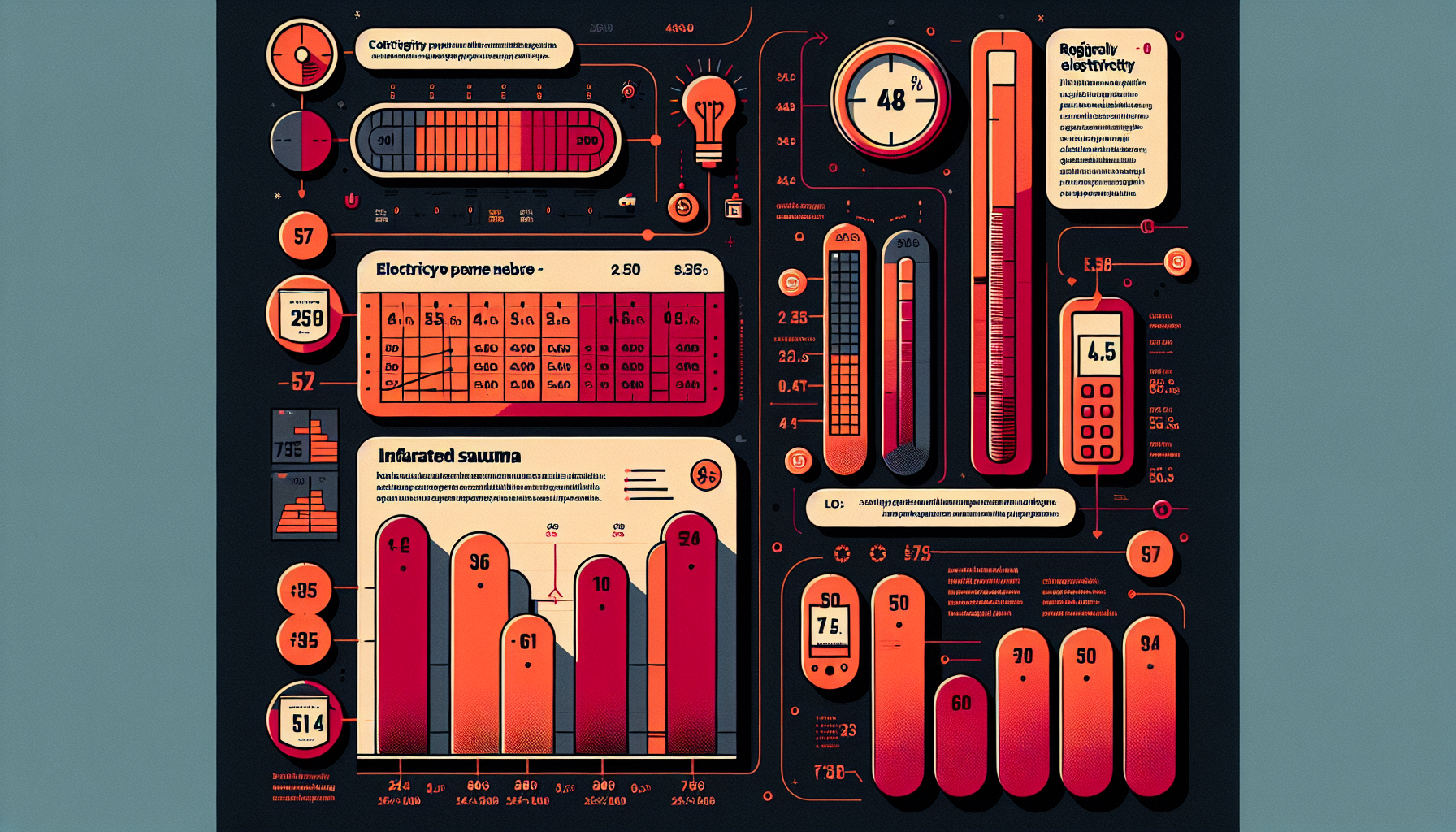
This is where Hotworx’s operating cost profile diverges sharply from a conventional fitness studio. You’re not running treadmills that members turn on for 30 minutes. You’re running 10 infrared saunas that draw power continuously.
Each infrared sauna consumes 1–3 kWh per hour depending on the unit size, target temperature, and insulation quality. Hotworx studios typically maintain saunas at operating temperature during all staffed hours — and since many locations operate on a 24-hour access model, the draw is nearly continuous.
Here’s the calculation at the conservative end:
- 10 saunas × 1.5 kWh/hour (mid-range) × 18 hours/day (accounting for some off-peak cycling) = 270 kWh/day
- 270 kWh × 30 days = 8,100 kWh/month
Now apply regional electricity rates from the EIA:
| Market | Rate per kWh | Estimated Monthly Cost |
|---|---|---|
| Low-cost (Texas, Southeast) | $0.10–$0.13 | $810–$1,050 |
| Mid-cost (Midwest, Mountain West) | $0.14–$0.18 | $1,135–$1,460 |
| High-cost (California, Northeast) | $0.22–$0.30 | $1,780–$2,430 |
A studio in Phoenix pays a fundamentally different electricity bill than one in Connecticut. If you’re evaluating a territory in a high-cost electricity market, this single line item can exceed $2,000/month. That’s not a normal retail electricity bill. A comparable-sized yoga studio or boutique gym might run $300–$500/month.
Factor in HVAC costs to cool the space around those saunas (the ambient temperature in a Hotworx studio is not comfortable without aggressive climate control), and the true energy cost could run 15–25% higher than the sauna draw alone.
Insurance Nobody Budgets For
The FDD requires comprehensive coverage: $1,000,000 per occurrence and $3,000,000 aggregate. That’s not one policy — it’s a stack:
- General liability — slip-and-fall, property damage, standard business coverage
- Professional liability — critical for a fitness concept where members exercise in high-heat environments unsupervised
- Property insurance — covering 10 infrared sauna units that represent a significant capital investment
- Workers’ compensation — required in most states, even for a lean staffing model
What makes Hotworx’s insurance profile distinctive is the heat exposure element. Underwriters view infrared sauna facilities differently than conventional gyms. The 24-hour unsupervised access model adds another risk layer. Both factors push premiums higher than standard boutique fitness coverage. For a deep dive on coverage types, waiver enforceability, and the specific risk factors driving these premiums, see our insurance and liability exposure analysis.
Estimated monthly insurance cost: $400–$1,250, depending on your state, claims history, and carrier.
Here’s the penalty that makes this non-negotiable: if you fail to maintain required coverage, the franchisor can obtain it on your behalf and charge you a $250 handling fee on top of whatever premium they negotiate — which will not be competitive.
The Marketing Costs Beyond Royalty
The $550 royalty does not include your marketing obligations. Those are separate, and they’re not optional.
Hotworx mandates participation in SocialMadeSimple, a third-party marketing platform that manages social media advertising for franchisees. This is not a suggestion — it’s a contractual requirement. Estimated cost: $200–$400/month per location.
That’s the managed program. You’ll also need a local marketing budget for:
- Google Ads / local search campaigns
- Grand opening promotions (first 90 days)
- Community sponsorships and events
- Referral program incentives
- Local print or direct mail (market-dependent)
The FDD’s suggested local marketing spend is typically 2–5% of gross revenue. On $27,500/month in revenue (the $330K annual average divided by 12), that’s $550–$1,375/month in discretionary local marketing.
Total monthly marketing cost: $750–$1,775/month — and that’s before any national ad fund contribution. We cover the first 90 days marketing ramp in detail separately, where spend should be significantly higher.
The Penalty Minefield
These aren’t costs you’ll necessarily incur. They’re costs you could incur if you fall out of compliance. The operating agreement has real teeth, and the penalty schedule is worth modeling as budget risk.
- Late royalty/fee payment: $100/week plus 18% annual interest on the outstanding balance
- NSF (bounced payment): $30 per transaction
- Insurance lapse: $250 handling fee if the franchisor obtains coverage on your behalf
- General noncompliance: $300–$5,000 per violation depending on severity and type
- Daily deal violation: $500 per day (running unauthorized discount promotions through platforms like Groupon)
- Secret shop inspection: $100 per inspection (not a penalty per se, but a cost triggered by the franchisor’s QA program)
- Site visit fee: $200/day for additional training visits
The daily deal penalty is the one that catches franchisees off guard. If you’re struggling with membership numbers and decide to run a Groupon to fill sessions, you could be racking up $500/day in penalties until you pull the promotion. The legal landscape analysis covers the broader compliance environment.
None of these should be in your base-case budget. All of them should be in your risk model.
The Complete Monthly Cost Stack
Here’s every “hidden” recurring cost — the line items beyond rent, staffing, and loan payments that belong in your financial model. These are the costs that separate a napkin-math projection from an actual operating budget.
| Category | Line Item | Low | Mid | High |
|---|---|---|---|---|
| Franchise Fees | Royalty | $550 | $550 | $550 |
| POS software | $129 | $129 | $129 | |
| CRM (SAIL) | $125 | $125 | $125 | |
| Virtual instructor | $100 | $100 | $100 | |
| Technology fee | $50 | $75 | $100 | |
| CC processing (3%) | $600 | $825 | $1,050 | |
| Utilities | Electricity (saunas) | $810 | $1,300 | $2,430 |
| HVAC supplement | $120 | $250 | $500 | |
| Insurance | Full coverage stack | $400 | $700 | $1,250 |
| Marketing | SocialMadeSimple | $200 | $300 | $400 |
| Local marketing | $550 | $960 | $1,375 | |
| Compliance | Secret shop / site visits | $0 | $25 | $50 |
| Total | $3,634 | $5,339 | $8,059 | |
The “hidden” costs beyond rent and staffing — meaning the technology fees, utility premium, insurance, and mandatory marketing — run $2,700–$5,500/month in most scenarios. The midpoint is roughly $4,000/month.
On $27,500/month in gross revenue (the $330K annual average), these costs alone consume 13–20% of your top line. Add rent ($2,500–$5,500), staffing ($3,000–$6,000), and debt service ($1,500–$3,000 on a typical SBA loan), and you can see why the Item 19 revenue number alone tells you nothing about what you’ll actually take home.
How to Use This in Your Model
If you’re building a serious financial model — and you should be before committing six figures to any franchise — here’s how to integrate these costs:
- Start with gross revenue assumptions. Use the FDD’s Item 19 data but model three scenarios: bottom quartile, median, and top quartile. If quartile data isn’t available, use 70%, 100%, and 130% of the reported average.
- Add every fixed monthly cost from the fee stack. The $1,004 in fixed technology and franchise fees is non-negotiable. It doesn’t scale with revenue. It hits the same whether you do $15K or $40K in a month.
- Model electricity for your specific market. Call your local utility, get the commercial rate schedule, and calculate based on the kWh estimates above. This is not a number to estimate nationally — it varies by 3x across markets.
- Get real insurance quotes. Contact three commercial insurance brokers who specialize in fitness or wellness facilities. Mention the infrared sauna component and the 24-hour access model. The quotes will be higher than generic fitness studio coverage.
- Include the full marketing obligation. SocialMadeSimple plus a realistic local marketing budget. If your model shows profitability only because you’ve allocated $200/month to marketing, your model is wrong.
- Stress-test against the penalty schedule. What happens to your cash flow if you’re late on one royalty payment and incur the $100/week penalty plus 18% interest? Not catastrophic in isolation — but on a month where revenue dipped and you’re already tight, it compounds.
The prospective franchisees who get into trouble aren’t the ones who ignore the big costs. They’re the ones who model rent, staffing, and royalties correctly but miss the $3,000–$5,000/month in fragmented technology fees, above-average utilities, insurance, and mandatory marketing that collectively determine whether the unit economics actually work.
Build the model with every line item. And don’t forget the capital expenditure that hits later — see our equipment lifecycle and replacement capex analysis for the $32K–$68K in year-5 costs that most investors never model.
Hotworx Franchise Intel is an independent research publication. We are not affiliated with, endorsed by, or sponsored by Hotworx or any franchisor. All data is sourced from publicly available FDDs, regulatory filings, and third-party research. Read more on our About page.