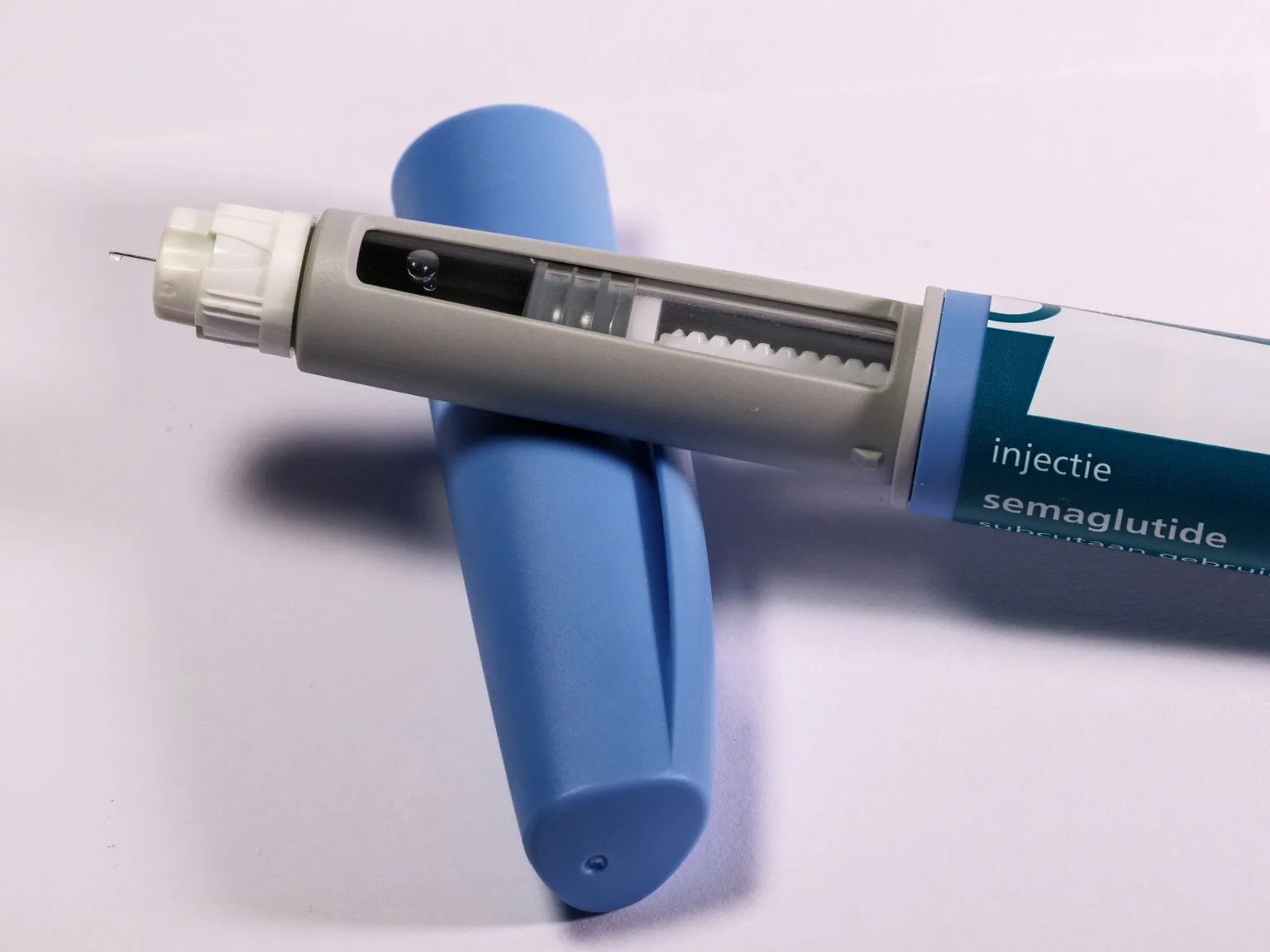
The GLP-1 Franchise Calculus: How Weight Loss Drugs Reshape the Hotworx Investment Case
Ozempic, Wegovy, and Mounjaro are rewiring who joins gyms, why they join, and what they want when they get there. Every fitness franchise investment made in 2026 needs a GLP-1 thesis — and most Hotworx prospects don’t have one.
Introduction
Here’s what happened in the fitness industry over the past 18 months: GLP-1 receptor agonist medications — the injectable weight loss drugs you’ve seen on every magazine cover — went from a pharmaceutical curiosity to the single largest demand-side force reshaping gym membership patterns since the pandemic.
The numbers aren’t subtle. Harrison Co. projects that GLP-1 adoption will add $6.8 billion in revenue to the gym, studio, and fitness club market — a 20% increase. That’s not a disruption that cancels gym memberships. It’s a disruption that changes who shows up, what they want, and which fitness models capture their spending.
If you’re evaluating a six-figure Hotworx franchise investment in 2026, you need to understand where an unmanned infrared studio sits in the post-GLP-1 fitness landscape.
The GLP-1 Fitness Consumer: Who They Are and What They Want
People on GLP-1 medications aren’t the same fitness consumer they were before the prescription. Research and industry data paint a specific profile:
They’re new or returning to fitness. A significant percentage of GLP-1 users are people who were sedentary or lapsed gym members. The weight loss creates both motivation and physical capacity to exercise. They’re entering (or re-entering) the fitness market for the first time in years.
They need strength training. The primary medical concern for GLP-1 users is muscle mass loss. Physicians are increasingly prescribing resistance training alongside GLP-1 medications to preserve lean mass during rapid weight loss. This drives demand for strength-focused fitness environments — weight floors, personal training, body recomposition programming.
They want body composition monitoring. GLP-1 users are medically engaged. They track weight, body fat percentage, lean mass, and metabolic markers. Fitness environments that offer body composition scanning, progress tracking, and data-driven programming align with their mindset.
They respond to integrated wellness. The GLP-1 user sees fitness as part of a medical protocol, not a standalone lifestyle choice. Environments that connect fitness to broader health management — nutrition coaching, metabolic testing, medication access — feel more relevant than single-modality studios.
How the Industry Is Responding
The fitness industry’s GLP-1 response isn’t hypothetical. As of May 2026, 17 fitness clubs and 10 solution providers have launched concrete GLP-1 integration programs:
Direct Medication Access
- Life Time launched in-club longevity clinics in Torrance and Corona, California, offering brand-name FDA-approved GLP-1 prescriptions, peptides, and hormone replacement therapy. Full rollout planned across their network over 24 months.
- In-Shape Family Fitness (63 California locations) partnered with KORB Health for white-label clinical GLP-1 integration — one of the first regional chains to offer pharmaceutical supply through a gym membership.
GLP-1 Programming Partnerships
- Crunch Fitness (550+ locations) partnered with Thrive to bring GLP-1 medication access and complementary programming to members across its entire network.
- Select YMCA locations launched dedicated Ozempic/Wegovy programming classes with body composition scanning.
The Emerging Model
The pattern is clear: fitness brands are positioning themselves as GLP-1 wellness partners, not just exercise facilities. They’re bundling medication access, body composition tracking, nutrition coaching, and strength training into integrated offerings.
Where Hotworx Sits in the GLP-1 Landscape
Hotworx’s core offering is a 15-minute isometric or 30-minute HIIT workout in an infrared sauna, delivered through virtual instruction in an unmanned studio. Evaluate that against what the GLP-1 consumer needs:
| GLP-1 Consumer Need | Hotworx Capability | Assessment |
|---|---|---|
| Strength training for muscle preservation | Limited resistance area, no coached strength programming | Weak fit |
| Body composition monitoring | No in-studio scanning or tracking | Not available |
| Integrated wellness / medical connection | No clinical partnerships, no medication access | Not available |
| Weight loss support | Infrared caloric burn marketing | Positioning overlap, but different mechanism |
| Recovery and maintenance | Infrared recovery, flexibility, low-impact options | Moderate fit |
| Data-driven progress tracking | Hotworx Burn Off App, TrainingTRAX AI coaching | Moderate fit |

The honest assessment: Hotworx’s strongest alignment with GLP-1 consumers is in recovery and maintenance — infrared sessions for flexibility, joint health, and active recovery between strength sessions. Its weakest alignment is in the primary driver of GLP-1 fitness demand: supervised strength training for muscle preservation.
Three Scenarios for Your Pro Forma
Scenario 1: GLP-1 as Tailwind
The bull case. GLP-1 users who achieve their weight loss goals transition from “losing weight” to “maintaining health.” In the maintenance phase, they’re looking for sustainable, low-impact wellness routines — exactly what 15-minute infrared isometric sessions provide. The $6.8 billion market expansion creates a larger pool of fitness consumers, some of whom discover infrared workouts as a complement to their gym-based strength training.
Probability assessment: Plausible but requires Hotworx to position itself as a complement to — not a replacement for — the gym membership GLP-1 users need for strength training.
Scenario 2: GLP-1 as Neutral
The base case. GLP-1 adoption reshuffles which types of fitness facilities grow, but infrared studios aren’t materially affected because their core audience overlaps minimally with the GLP-1 fitness consumer profile. Hotworx neither gains from nor loses to GLP-1 trends.
Probability assessment: Reasonable if Hotworx’s addressable market is genuinely distinct from GLP-1-driven fitness demand.
Scenario 3: GLP-1 as Headwind
The bear case. GLP-1 medications reduce the total demand for “weight loss through exercise” — the marketing angle that drives a meaningful portion of Hotworx’s lead generation. “Burn 800 calories in 30 minutes” messaging loses potency when prospects are losing weight pharmaceutically. Meanwhile, big-box chains that integrate GLP-1 services AND infrared sauna amenities capture the wellness-minded consumer in a single membership.
Probability assessment: The most concerning scenario for franchisees. GLP-1 adoption is accelerating, not plateauing, and the marketing-to-conversion impact on “calorie burn” messaging is already visible in industry surveys.
The Franchisor Control Problem
Here’s the structural issue that’s specific to Hotworx as a franchise investment: the GLP-1 response requires strategic decisions that individual franchisees cannot make independently.
- Adding clinical partnerships? Requires franchisor approval and system-wide implementation.
- Changing marketing messaging away from caloric burn toward recovery/wellness? The proprietary tech stack and brand guidelines are franchisor-controlled.
- Adding body composition scanning or nutrition coaching? Requires franchisor authorization for equipment and services beyond the approved offering.
- Partnering with local GLP-1 providers for cross-referrals? May conflict with franchise agreement restrictions on independent business relationships.
An independent infrared studio owner could pivot their positioning, add complementary services, and partner with local telehealth providers within weeks. A Hotworx franchisee is constrained by the franchise agreement, the operations manual, and the franchisor’s strategic timeline.
This isn’t a criticism of franchising — it’s a structural reality of franchise agreement constraints. The question is whether Hotworx’s corporate leadership is building a GLP-1 response strategy, and how quickly it will reach the studio level.
What to ask Hotworx corporate:
- “How is Hotworx positioning itself relative to the GLP-1 fitness trend?”
- “Are there plans to add body composition monitoring, clinical partnerships, or complementary wellness services?”
- “Has marketing messaging been updated to reflect the shift from weight loss to recovery and wellness positioning?”
- “Can individual franchisees pursue local partnerships with GLP-1 providers or wellness clinics?”
The Lendesca Angle
If the GLP-1 analysis changes your risk assessment for single-modality fitness concepts, it’s worth evaluating business acquisitions with more defensible competitive moats — businesses where the value proposition isn’t easily replicated by larger competitors adding amenities or riding pharmaceutical trends. Lendesca helps prospective business owners evaluate and finance acquisitions across industries, including wellness and fitness businesses with diversified revenue streams and structural advantages that don’t depend on a single modality holding its premium.
What This Means for Your Due Diligence
Add these items to your Hotworx due diligence checklist:
- Research GLP-1 adoption rates in your target market. Markets with higher GLP-1 penetration will see the competitive effects faster. Affluent suburban markets — where Hotworx typically performs best — are also where GLP-1 adoption is highest.
- Audit the competitive response. Check whether Crunch, Life Time, or regional chains in your trade area have launched GLP-1 programs or recovery suites. Cross-reference with your territory analysis.
- Stress-test your marketing assumptions. If “calorie burn” and “weight loss” messaging drives 30–50% of your lead flow, model what happens when that message resonates with a shrinking audience.
- Ask current franchisees. On your validation calls, ask: “Have you noticed any change in the types of prospects coming through your door? Are fewer people citing weight loss as their primary motivation?”
- Evaluate the recovery positioning. If Hotworx’s strongest GLP-1 alignment is as a recovery complement, model your unit economics on that positioning — a smaller addressable market that pays for recovery sessions alongside a primary gym membership, not instead of one.
The 10-Year View
The GLP-1 market is projected to reach $100+ billion globally by 2030. Adoption isn’t slowing — it’s accelerating as prices drop, insurance coverage expands, and oral formulations replace injectables.
For a 10-year franchise investment, the question isn’t whether GLP-1s will affect the fitness industry. It’s whether the fitness model you’re investing in is positioned to benefit from the shift or be displaced by it.
Hotworx isn’t obviously in either category yet. That ambiguity is itself a risk factor — and a reason to build GLP-1 sensitivity into your financial model rather than ignoring it because nobody in the franchise sales process will bring it up.
This analysis is editorially independent and not affiliated with, endorsed by, or sponsored by Hotworx or any pharmaceutical company.